
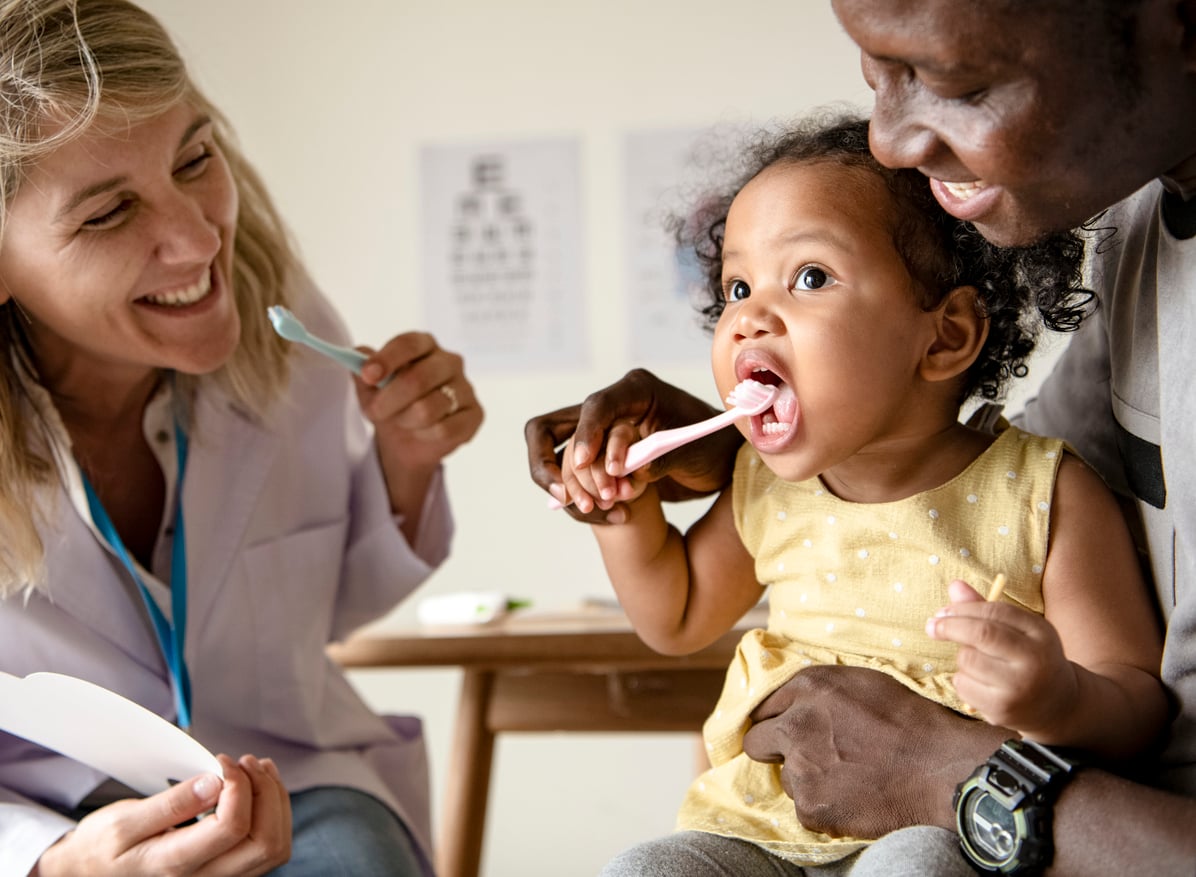
| Quick Answer: Pediatric dentistry serves patients from infancy through adolescence — typically from the first tooth (around 6 months) to age 18. Some pediatric practices extend care to special needs patients into their mid-20s. The American Academy of Pediatric Dentistry recommends a child’s first dental visit by age 1 or within 6 months of their first tooth erupting, and most children should transition to an adult dentist sometime between ages 17 and 21. |
Most parents know pediatric dentists see children — but the actual age range is wider than many people realize, and it shifts depending on the practice. Some pediatric dentists only see patients up to age 12. Others stay with families through high school. A smaller number, including our practice, continue to see special needs patients well into their twenties.
Here’s the full picture — when pediatric care should start, when it typically ends, and where our kid-focused dentistry in Las Cruces fits in.
What Age Does Pediatric Dentistry Start?
Pediatric dentistry starts with the first tooth. The American Academy of Pediatric Dentistry recommends a child’s first dental visit by age 1 or within 6 months of the first tooth erupting — whichever comes first. For most babies, that means a first visit sometime between 6 and 12 months.
This early visit isn’t a full cleaning in the adult sense. It’s more of an introduction — a chance for the dentist to look at the baby’s gums and first teeth, talk through brushing technique, discuss nutrition and bottle habits, and answer any questions new parents have. It also establishes a “dental home” for the child, which research has linked to better oral health outcomes over time.
When Should My Baby’s First Dental Visit Be?
The practical answer for most families in the Mesilla Valley: by your baby’s first birthday. If your child’s first tooth came in early (say, at 4 months), you can aim for 6 months. If the first tooth hasn’t come in by 10 months, it’s still fine to schedule the first visit — the dentist can check on development even without teeth to clean.
At Children’s Dental Clinic & Orthodontics of Las Cruces, we see patients from 9 months through age 18, and we accept first-visit families on an ongoing basis. Our approach is to keep that first visit short, gentle, and focused on building a positive association — so the second, third, and hundredth visits get easier, not harder.
What Age Does Pediatric Dentistry Cover?
The formal answer: pediatric dentistry is a recognized dental specialty that covers infants, children, and adolescents — typically birth through age 18. But in practice, the upper age varies:
- Many pediatric practices see patients up to age 18 and encourage a transition to an adult dentist soon after
- Some extend care through age 21, particularly for patients still in college-aged orthodontic treatment
- A smaller number of practices continue to serve special needs patients well beyond typical pediatric age ranges — some into the mid-20s
That flexibility on the upper end matters for families whose children have complex healthcare needs, because transitioning to an adult dentist who isn’t familiar with those needs can be disruptive.
Does Pediatric Dentistry Include Teenagers?
Yes. Adolescent dentistry is a standard part of kid-focused dental practice, and it’s arguably one of the most important windows. Teenagers face a distinct set of oral health challenges — wisdom teeth, orthodontic treatment, sports-related injuries, sometimes early exposure to sugary beverages and habits that adult dental conversations have to address.
Our team is trained to talk to teenagers directly, not just through their parents, and we handle adolescent dental care with the same thoroughness as we handle care for younger children — including sealants, orthodontic consultations, and discussions about sports mouthguards and oral hygiene habits that will carry into adulthood.
When Should My Child Transition to an Adult Dentist?
There’s no universal rule, but most pediatric practices recommend transitioning sometime between ages 17 and 21. The right moment depends on the individual — their healthcare needs, their comfort level, whether they’re finishing high school and moving away for college, and whether they have any ongoing treatment like orthodontics or wisdom tooth extractions that should be completed before a switch.
For families who’ve been with a pediatric practice since infancy, the transition can feel like a bigger deal than it needs to be. A good pediatric office will help with the handoff — sharing records, discussing the transition with the patient, and recommending adult practices if helpful.
What About Children With Special Needs?
This is where our practice differs from most. Our special needs dentistry program serves patients up to age 26, extending far beyond the typical pediatric age limit. This longer timeframe is intentional — for patients with complex medical or developmental needs, continuity of care with a familiar team matters a great deal. The American Academy of Pediatric Dentistry specifically acknowledges this longer age range as appropriate for pediatric practices with special needs focus.
If your child has physical, developmental, mental, sensory, behavioral, cognitive, or emotional needs that require specialized dental care, we’re equipped to provide continuity of care well into adulthood — including in-office sedation and hospital dentistry when needed.
Our Kid-Focused Dentistry in Las Cruces
Families across the Mesilla Valley — Las Cruces, Mesilla, Anthony, and the surrounding communities — choose us because we’re genuinely built for children. Our kid-focused practice is set up from top to bottom for pediatric care: kid-sized equipment, a team trained specifically in pediatric behavior guidance, and an office atmosphere that doesn’t feel like an adult medical setting. Whether your baby is here for a first-tooth check or your teen is in for their last pre-college cleaning, the same principles apply.
Frequently Asked Questions
What’s the difference between a pediatric dentist and a family dentist?
A pediatric dentist completes 2–3 additional years of training specifically focused on children’s dental development, behavior guidance, special needs, and age-appropriate techniques. A family or general dentist treats patients of all ages but doesn’t have the same specialized pediatric training. Both can care for healthy children, but pediatric dentists are better equipped for very young patients, anxious children, and those with special healthcare needs.
Do pediatric dentists see infants?
Yes. Pediatric dentists are trained to care for infants from the eruption of the first tooth, typically around 6 months. The first visit focuses on examining the baby’s mouth, discussing teething, reviewing nutrition and oral hygiene habits, and establishing a dental home for ongoing care.
When should a child stop seeing a pediatric dentist?
Most children transition to an adult dentist between ages 17 and 21. The right timing depends on the patient’s comfort, any ongoing treatment, and whether they have special healthcare needs. A good pediatric practice will help guide the transition when the time is right.
Can teens see our dental team?
Absolutely. Teen dentistry is a standard part of our practice, and many teens prefer the familiar environment of a practice they’ve been coming to for years. Our team handles the specific oral health challenges teens face — sports mouthguards, orthodontic care, sealants, and the transition to adult oral hygiene habits.
At what age should my child have their first dental cleaning?
A true cleaning — with polishing and plaque removal — typically starts around age 3, when most children have their full set of baby teeth and can tolerate a longer visit. Before that, the first few dental visits focus on exam and gentle familiarization rather than formal cleaning.
|
Whether your child is 9 months or 18, we’re ready to see them. We truly care about your child’s health and happiness. Reach out to get your child’s appointment scheduled. We can’t wait to see you. Children’s Dental Clinic & Orthodontics │ (575) 526-5522 │ 1901 Calle de Ninos, Las Cruces, NM 88005 │ Contact Us → |