
| Quick Answer: Children have 20 baby teeth total — 10 on top and 10 on the bottom — typically all in place by age 3. Those 20 baby teeth are eventually replaced by 32 permanent adult teeth, including four wisdom teeth that erupt in the late teens or early twenties. The numbers differ because permanent molars don’t replace anything; they erupt into new space as the jaw grows. |
If you’ve ever sat next to your child as they lost a tooth and wondered how many more are coming — or going — you’re in good company. It’s one of the most common questions we hear at Children’s Dental Clinic & Orthodontics of Las Cruces. The short answer is 20 baby teeth and 32 adult teeth. The longer answer involves a six-year-plus timeline, a few teeth that don’t replace anything, and a handful of signs that something might be off schedule.
This guide walks through exactly how many teeth children have at each stage, why adults end up with more teeth than kids, and when it’s worth bringing your child in for a check.
How Many Baby Teeth Do Children Have?
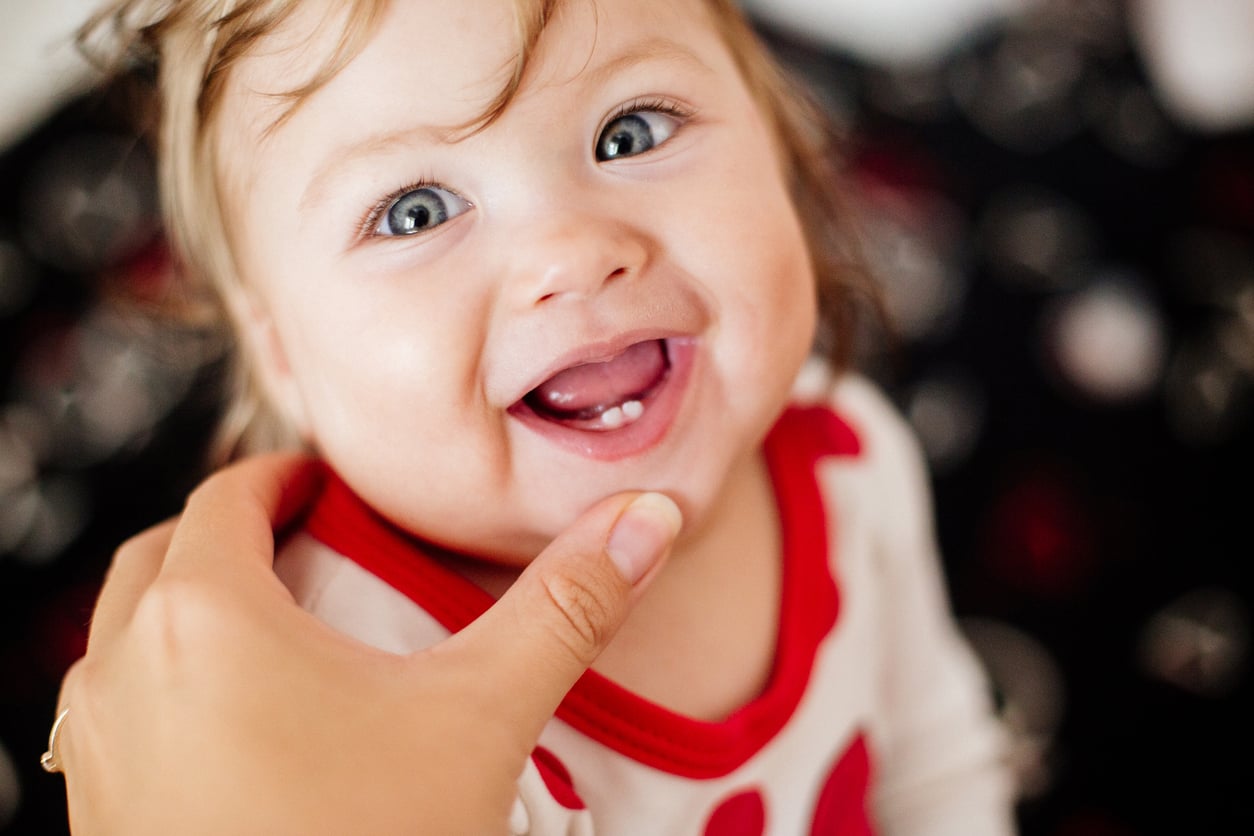
By the time a child is about 3 years old, they should have a full set of 20 baby teeth — 10 on top and 10 on the bottom. These are also called primary teeth or deciduous teeth. According to the American Dental Association’s eruption chart, the first baby teeth typically come in around 6 months of age, with the full set in place by roughly 33 months.
The 20 baby teeth break down like this:
- 8 incisors (the flat front teeth — four on top, four on bottom)
- 4 canines (the pointed teeth next to the incisors)
- 8 molars (the larger chewing teeth in the back)
Baby teeth are designed to be temporary, but they do real work while they’re here. They help children chew, speak clearly, and guide the permanent teeth into the correct position underneath. That’s one of the reasons our kid-focused dentists take cavities in baby teeth seriously — an early-lost baby tooth can cause the permanent tooth below it to drift into the wrong position.
How Many Teeth Should a 3-Year-Old Have?
By age 3, most children have all 20 baby teeth. If your 3-year-old is missing a few, it’s usually nothing to worry about — eruption timing varies, and some kids are simply late bloomers. But if your child has no teeth by 18 months, or fewer than 16 teeth by age 3, it’s worth a visit to confirm things are developing normally.
Children’s Dental Clinic recommends a first dental visit by the first birthday or within six months of the first tooth erupting — whichever comes first. That schedule is endorsed by both the American Academy of Pediatric Dentistry and the American Dental Association.
How Many Adult Teeth Will My Child Get?
Adults have 32 permanent teeth in total, including four wisdom teeth. That’s 12 more teeth than a child starts with. Here’s the full breakdown:
| Permanent Tooth Type | Count | Replaces a Baby Tooth? | Typical Eruption Age |
|---|---|---|---|
| Incisors (front teeth) | 8 | Yes | 6–8 years |
| Canines (pointed teeth) | 4 | Yes | 9–12 years |
| Premolars (bicuspids) | 8 | Yes — replace baby molars | 10–12 years |
| First molars (“6-year molars”) | 4 | No — brand-new teeth | 6–7 years |
| Second molars (“12-year molars”) | 4 | No — brand-new teeth | 11–13 years |
| Third molars (wisdom teeth) | 4 | No | 17–25 years |
When you add it up: 8 + 4 + 8 + 4 + 4 + 4 = 32 permanent teeth. Some people only end up with 28 if their wisdom teeth never come in or are extracted — which is common.
Why Do Adults Have More Teeth Than Children?
This is the question that trips up most parents. The quick answer: kids’ jaws are smaller, so there’s literally not enough room for 32 teeth early on. As children grow, the jaw grows with them, creating space behind the last baby molars. The 12 extra adult teeth — first molars, second molars, and wisdom teeth — erupt into that new space without replacing anything.
Baby incisors and canines are replaced one-for-one by permanent incisors and canines. Baby molars are replaced by premolars. But the permanent molars at the back of the mouth are brand-new teeth that never had a baby-tooth predecessor.
What Happens During the Mixed Dentition Stage?
Between ages 6 and 12, children are in what pediatric dentists call the mixed dentition stage — a mix of baby teeth and permanent teeth at the same time. This is one of the most important stretches for dental monitoring, and it’s also the cavity-prone age for a specific reason: the newly erupted 6-year molars have deep grooves that trap food, and kids this age often take over their own brushing before they’re really ready.
A few things help during this stage:
- Keep brushing supervised until at least age 7 or 8
- Ask your dentist about dental sealants on the 6-year molars as soon as they come in
- Don’t force a loose tooth out — let the wiggling do the work
- Keep up with six-month checkups so we can monitor how the permanent teeth are tracking
Our team at Children’s Dental Clinic watches for early-alignment issues during every visit in this stage. If something looks like it’s heading toward an orthodontic concern, we can flag it early — our orthodontic services include early treatment (Phase 1) options for children as young as 7.
Visiting Children’s Dental Clinic in Las Cruces
Families across the Mesilla Valley — Las Cruces, Mesilla, Anthony, and the surrounding communities — rely on our kid-focused dentistry team for every stage of tooth development. We see patients from 9 months old through age 18, and special needs patients up to age 26. Whether your child is waiting on that first baby tooth, in the middle of the mixed dentition stage, or approaching the arrival of the 12-year molars, we’re here to monitor growth and catch anything that needs attention early.
Frequently Asked Questions
How many teeth should a 3-year-old have?
Most 3-year-olds have all 20 baby teeth by this point. Some children finish teething slightly later, so anywhere close to 20 is within the normal range. If your 3-year-old has fewer than 16 teeth, it’s worth a visit to confirm normal development — some kids are simply late bloomers, and others may have congenitally missing teeth worth identifying early.
How many teeth should a 5-year-old have?
A 5-year-old typically has all 20 baby teeth and hasn’t started losing them yet. Tooth loss usually begins around age 6 with the lower front teeth. If your 5-year-old has already lost teeth due to decay or injury, it’s important to see a pediatric dentist to discuss whether a space maintainer is needed to hold the gap open for the permanent tooth.
Do kids lose all their baby teeth?
Yes. All 20 baby teeth are designed to fall out and be replaced by permanent adult teeth. The process starts around age 6 with the lower front teeth and continues until around age 12, when the last baby molars are shed. None of the original 20 baby teeth are meant to stay.
How many teeth do adults have?
Adults have 32 permanent teeth in total, including 8 incisors, 4 canines, 8 premolars, and 12 molars (4 of which are wisdom teeth). Some adults have only 28 teeth if their wisdom teeth never erupted or were extracted — which is a common situation, not a problem.
Why do we have wisdom teeth?
Wisdom teeth are the third set of permanent molars that typically erupt between ages 17 and 25. Evolutionarily, they helped early humans chew tough, unprocessed food. Modern jaws are often too small to accommodate them, which is why they frequently need to be removed.
At what age do permanent molars come in?
Permanent molars come in three waves. The first molars (6-year molars) erupt around age 6–7, the second molars (12-year molars) around age 11–13, and the third molars (wisdom teeth) between ages 17 and 25. None of these permanent molars replace baby teeth.
|
Ready to schedule your child’s next visit? We truly care about your child’s health and happiness. Reach out to get your child’s appointment scheduled. We can’t wait to see you. Children’s Dental Clinic & Orthodontics │ (575) 526-5522 │ 1901 |